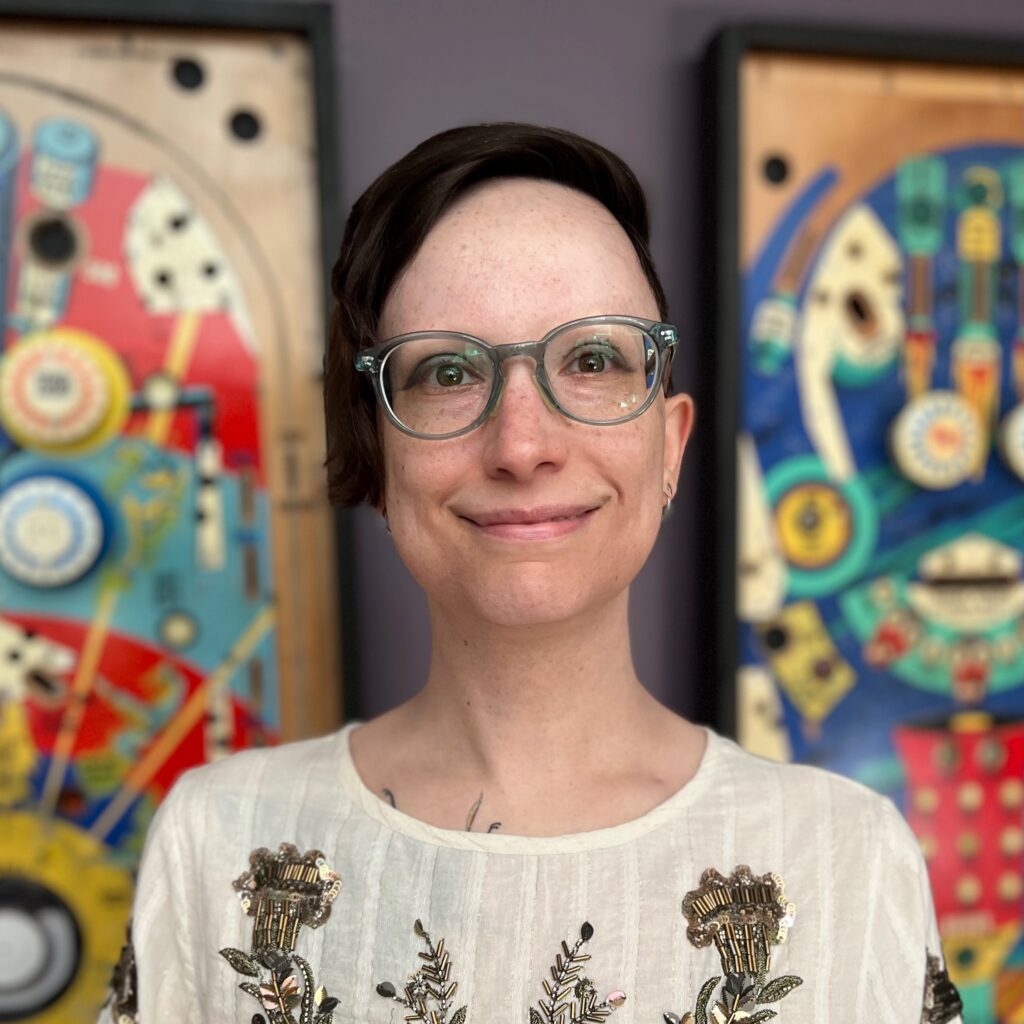
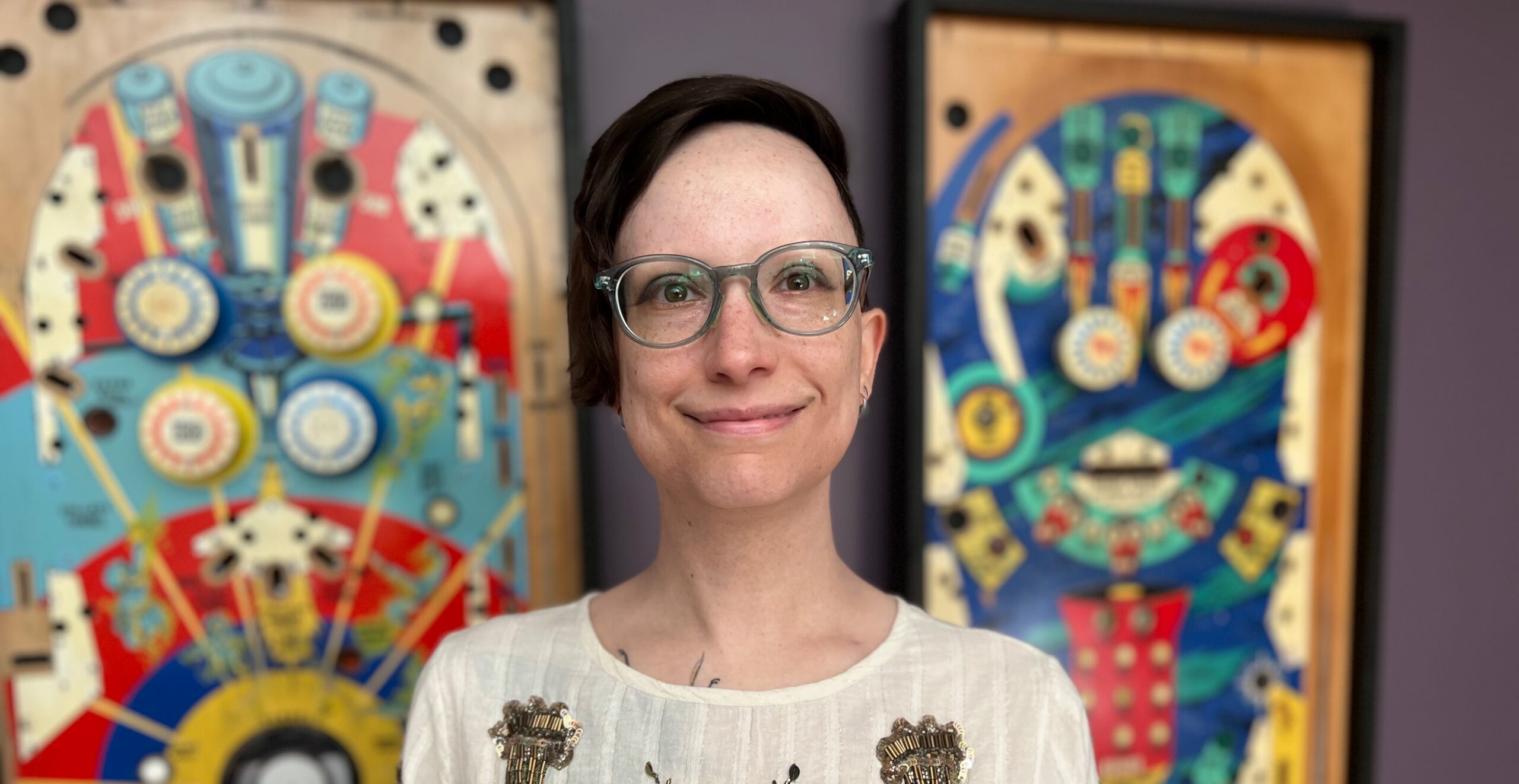
Kara’s Experience
Having an autoimmune condition, she was wary about the unknowns of immunotherapy; now, she's sharing her side effect story to raise awareness
I was 38 years old in 2021 when I was diagnosed with triple negative breast cancer.
My husband Patrick and I showed up to our first meeting with the oncologist with the same feelings any patient and caregiver might have: fear, sadness, trepidation; but we also had a lot of knowledge.
Professionally, I’m a comparative immunopathologist. That means that I’m a veterinarian who’s a boarded pathologist with expertise in pathology across many different species, including people. I have a subspecialty in immunopathology, the pathology and physiology of the immune system. So, when my oncologist recommended that we add a checkpoint inhibitor immunotherapy to my treatment regimen, I approached it like a scientist and asked a bunch of questions.
A Decision Based on Data
She showed me data from published large-scale clinical trials with hundreds of thousands of patients. She showed me her unpublished data in studies that were being conducted under her expert guidance and the guidance of other people working in this field. We asked some additional questions about it: What does this mean? What does the data tell us? It was very clear that immunotherapy provided a benefit to disease-free survival and it reduced the risk of cancer coming back.
In those clinical trials, patients had reported that immunotherapy was actually quite easy and that severe side effects were relatively rare. So we asked additional questions: What about patients who have a preexisting autoimmune condition like me? The data at that time said I was at no greater risk than any other patient receiving immunotherapy.
All the data was really compelling, so we moved forward. To be clear: I don’t regret for five seconds the treatment choices we made. Everybody in the room at those appointments, save for perhaps Patrick, although he was really educated at that point, was an expert. I was an expert. My oncologists were experts. We were all making decisions with the best information we had at the time.
immunotherapy when you have an autoimmune condition
Immunotherapy works by releasing the “brakes” on the immune system, and when your immune system already tends to attack your healthy tissues, removing those brakes can be risky. Learn more here.
An Avalanche of Side Effects
It started with a rash on my arms and my legs, spread to my torso shortly after. Then came the joint pain, randomly small, large joints, especially right after an infusion, severe enough to keep me awake at night and render me unable to sit still for very long.
Then came the tachycardia, an elevated heart rate. My oncologist, when I reported this, said, “Well, one of the chemo drugs that you’re on actually is known to cause a slightly elevated heart rate, but I’m going to send you to a cardiologist anyway, just to be safe.” Turns out that cardiologist was interested in immunotherapy, too. How lucky did I get?
All the testing that the cardiologist performed said nothing was wrong with me at that time, but he said, “Let’s keep watch because the immunotherapy you’re on is known to cause severe inflammation in patients’ hearts.” But I wasn’t presenting like the patients in the studies he was referring to, so my care team wasn’t too worried at that point.
Then came the first incident that would become a pattern, landing me in the hospital in the ICU repeatedly.
We woke up at 2:00 in the morning. I had a fever of about 102, had an extremely elevated heart rate of 190 or more beats per minute, terribly low blood pressure, and really bad joint and muscle pain. In the ER, my treatment consisted of IV fluids, high doses of Tylenol and ibuprofen, and IV antibiotics. Why the antibiotics, you might ask? I had presented like a patient who has sepsis: a severe, systemic, life-threatening bacterial infection. So, right when the doctors saw me, they knew they needed to act, because if I was septic and they didn’t treat me with antibiotics, it would be life-threatening to me. So, the antibiotics made sense, but they never were able to identify an infection.
After several days in the ICU, I was discharged to go home. That pattern would repeat itself several times, and after my fifth and final dose of immunotherapy, the last time that I was rushed into the ER, my heart rate was over 200. My blood pressure was through the floor, as the ER doc would say, I had severe muscle and joint pain and swelling, and my fever was over 104 degrees.
I was seriously ill. They gave me IV antibiotics, as they had the other times – two antibiotics this time, just in case, because of how high that fever was. But there was a very astute ER doctor who listened to us, listened to me in my slightly rambling state, but more importantly, listened to Patrick, who emphasized that it’s not it’s not what you’re thinking it is. Look deeper. So, she went back and she looked at my records, and she tested cardiac troponin, which is an enzyme that’s used to detect and monitor damage to the heart. And sure enough, there it was. We finally had an answer.
I had cardiac inflammation and damage and systemic inflammation. My entire care team agreed that it was likely the immunotherapy causing it.
The End of Treatment (But Not Side Effects)
I was finally discharged, but I wasn’t fully over it. I ran a fever for seven weeks. Seven weeks. Patrick was a sleep-deprived saint during that time because I required round-the-clock anti-inflammatory medications every six hours on the dot to keep me alive, quite literally.
Once I stabilized, I was able to finally have my surgery, which had been delayed by my immunotherapy complications. Once I got through surgery, which was long after I had finished immunotherapy, I started developing additional immunotherapy side effects: an autoimmune attack of the muscles that allow my eyes to function, making it so I couldn’t focus my eyes. It was scary, especially for a pathologist, but thankfully, temporary.
Today, my eyeballs work fine, but I do have severe dry eye. I have periodic skin inflammation that’s both not pretty to look at and quite painful. My joints and muscles still hurt, and despite exercise, I can’t build muscle. I’m still fatigued, and I still get heart inflammation sometimes. I have sporadic chest pain, and to this day, I can’t get vaccines because boosters flare my cardiac inflammation, which is dangerous for me.
important reading about side effects
Side Effects 101: Learn how side effects of immune-related cancer treatments are unique and how to best approach them.
Go Deeper: Learn how to weigh the risk of immunotherapy side effects based on the state of your autoimmune condition.
Reflecting on Lessons Learned
What’s struck me about this whole experience is that in 2021 and ‘22, everybody was doing the right thing with the information we had at the time. None of us really knew what we were doing. We had no idea. We now know that what I had has been sort of colloquially named “triple M”: myocarditis, myositis, and myasthenia gravis. Those are inflammation of your heart, muscles and an immune attack on the area where your nerves and your muscles communicate.
Again, the last one was temporary, thankfully, but there hadn’t been a patient with that problem that had looked like me. So, my care team – oncologist, rheumatologist, cardiologist, and one very inflamed pathologist – we actually published a small case series to get that information out there to help other oncologists recognize the cases in their patient population.
Science and medicine have done something truly extraordinary with immunotherapy. Oncologists are able to save patients that otherwise wouldn’t still be here. But we still have a lot to learn about side effects, and that’s going to require not only research, but real-time collaboration between physicians and open communication with patients.
If you think about it, what we’re experiencing with immunotherapy isn’t so different from the learning curve we had with chemo side effects. Everyone was afraid of chemo because the side effects were so terrible. But now oncology teams have ways of managing those side effects so that they can get their patients through treatment relatively easier than in the past. Immunotherapy doesn’t have to be any different than that, because rheumatologic drugs are widely available and can be used to manage autoimmune inflammation in these patients.
While I’m extraordinarily fortunate to be treated by a rheumatologist who works with cancer patients like me all the time, she wasn’t the one who recognized the autoimmune nature of what was happening to me in the first place. It was an attending rheumatologist who was sent into the ICU to take a look at me. There are rheumatologists all over the place, in small community hospitals everywhere, with access to those extremely critical medications and access to guidance from other rheumatologists with experience in managing patients like us.
My Hope for Physicians and Patients
If I could give a message to oncologists, it’d be this: Please have open, honest, genuine conversations with your patients. Show them the data and make them partners in their own care. They could be critical in identifying early these situations that require medical intervention. Preemptively build those multidisciplinary teams, because then you can say to your patients, “This is the gold standard of treatment for you. These things could potentially happen, but when and if they do, we’re ready. We have teams. We can continue your cancer treatment and we can give you the best outcome possible.” I want you to understand that is hope you are handing them.
And to patients and caregivers: Trust your gut. Trust your instincts. You are the ones living in your body. You are the ones watching your loved ones go through this. If you think something’s wrong, it probably is. You have a right to ask your care teams to make you a partner in your own care because it’s your life.
Learn, absorb, gather knowledge about your condition and the options available to you, because knowledge itself is hope.
You can view Kara sharing her story with a live audience here.

Dr. Kara Corps is a board-certified comparative veterinary immunopathologist, breast cancer survivor, and advocate for patients and survivors. She has lived with an indefinitively diagnosed, lupus-like autoimmune condition since her late teens, which added additional immunotherapy side effect risks and considerations. Dr. Corps serves on the FACS board of directors.
Kara's Case
Cancer Type
Triple Negative Breast Cancer
Immune-Related Treatment Type
Immunotherapy
Immunotherapy Side Effects Experienced
- Skin reactions (recurrent rashes, itchiness, sores, thinning of the skin)
- Nerve issues (burning, cramping, numbness, tingling)
- Fatigue or exhaustion
- Joint/bone pain or swelling
- Mobility issues (stiffness, weakness)
- Shortness of breath
- New heart problems
- New allergies to food or environment
- Vision issues
- Brain fog (change in thinking ability, confusion, lack of focus)
- Dry eyes
- Dry mouth (burning, lack of saliva)
- Headaches
- Muscle pain and weakness
- High fever
Important: The opinions expressed in “Lived Experience: Stories from Patients and Care Teams” (Lived Experience Stories) are solely those of the User, who may or may not have medical or scientific training. These opinions do not represent the opinions of Foundation for Autoimmune & Cancer Support (FACS). Blogs are not reviewed by a physician or any member of the FACS editorial staff for accuracy, balance, objectivity, or any other reason except for compliance with our Terms and Conditions. Some of these opinions may contain information about treatments or uses of drug products that have not been approved by the U.S. Food and Drug Administration. FACS does not endorse any specific product, service, or treatment.
Do not consider Lived Experience Stories as medical advice. Never delay or disregard seeking professional medical advice from your doctor or other qualified healthcare provider because of something you have read on FACS. You should always speak with your doctor before you start, stop, or change any prescribed part of your care plan or treatment. FACS understands that reading individual, real-life experiences can be a helpful resource, but it is never a substitute for professional medical advice, diagnosis, or treatment from a qualified health care provider. If you think you may have a medical emergency, call your doctor or dial 911 immediately.
Lived Experience: Stories From Patients and Care Teams

How to Help
We want all cancer patients to know that new generation cancer treatment can have unpredictable and life-altering side effects – and that these side effects can be managed.
You can help us raise awareness and empower patients.
Check Out Our Latest Videos
Video Title
Lorem ipsum dolor sit amet, consectetur adipiscing elit. Ut elit tellus, luctus nec ullamcorper mattis, pulvinar dapibus leo.
Video Title
Lorem ipsum dolor sit amet, consectetur adipiscing elit. Ut elit tellus, luctus nec ullamcorper mattis, pulvinar dapibus leo.
We'd Like to Thank Our Generous Sponsors
Lorem ipsum dolor sit amet consectetur adipiscing elit sem bibendum iaculis odio, hendrerit lobortis penatibus phasellus non vivamus arcu gravida integer sodales, sociis laoreet feugiat class auctor.