
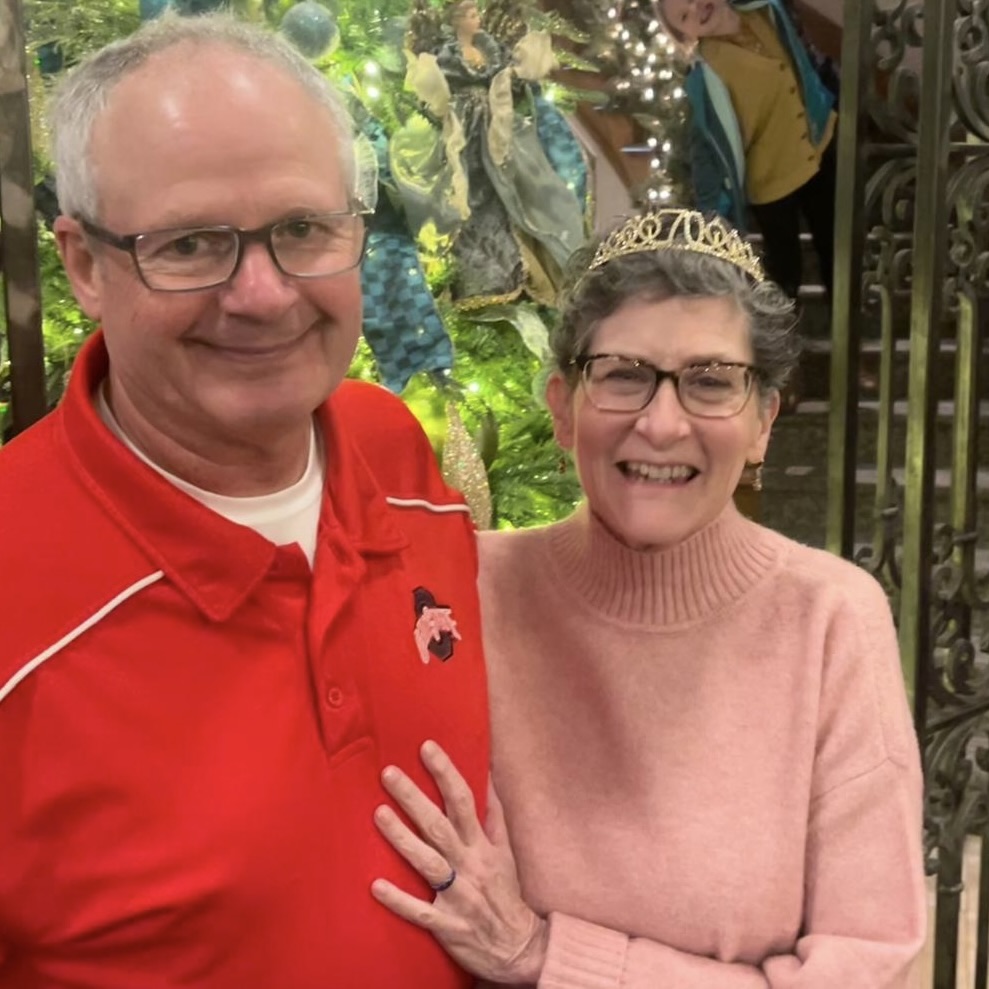
Cindy’s Experience
Immunotherapy side effects immobilized her; now, she's hiking again.
In the summer of 2020, I was taking care of my grandkids when I noticed that a mole on my arm looked different. It had changed.
When I went to my dermatologist, he took one look at the mole and said, “I’m going to biopsy this right now.” I knew that wasn’t a good sign. I got the diagnosis of melanoma, and my doctor referred me to an oncologist.
When I had surgery to remove the melanoma, they removed some of my lymph nodes, as well. Discovering that the cancer had spread to my lymph nodes, the doctors recommended I have a year of pembrolizumab (Keytruda). Thankfully, my body tolerated the immunotherapy wonderfully. I flew through treatment with hardly any side effects. And for a year, I had clear scans.
Then the cancer came back.
This time, the doctors recommended encorafenib (Braftovi) and binimetinib (Mektovi) – a targeted therapy for a gene mutation I had. Thankfully, I didn’t have any bad side effects, but I did have some strange ones, like getting curly hair and seeing things that weren’t there, which was “fun.” Weird side effects aside, the treatment was effective. My CT scans were clear again, and I went another year with no evidence of disease.
Editor's Note
Each patient responds to immunotherapy treatments differently. Since each person’s immune system is unique, it’s impossible to predict how each patient will respond. What’s important is to be aware of the risk and be prepared to advocate for specialized care if you do experience side effects.
A Riskier Treatment
Then, one day in October of 2024, I noticed a lymph node that didn’t feel right. My oncologist confirmed that the cancer was back, and then sent me home with a stack of information full of warnings about the immunotherapy treatment I needed, ipilimumab/nivolumab (Opdivo/Yervoy), commonly referred to as ipi/nivo.
I was told that the side effects of ipi/nivo could be life-altering and potentially permanent. So, I was well and fully warned, but I didn’t feel like I had a choice. I had things to do.
I wanted to be here for my children and grandchildren. I’ve always been very involved in my grandchildren’s lives; I wanted to be here to help with them. And my husband, Tony, and I had just bought a new camper van – we were ready for new adventures.
Besides, I had been through melanoma treatment twice before without any problems; I figured, “Why wouldn’t this treatment be the same?”
So, I decided to go for it.
The first two treatments, everything was okay. Tony would take me to my treatments in the camper van. We’d come out to the van and have a cup of tea in the parking lot or go sit and look at the river. It wasn’t how we’d imagined using the van, but it added some fun to the days that weren’t fun at all.
After the third treatment, things changed. The pain started – like fireworks in my legs. The worst thing was at night. I couldn’t sleep. I couldn’t find a way to be comfortable, but I was determined to keep going with the treatment. I set my mind on just plowing on through. (I can be a little stubborn, as Tony can attest.)
An Avalanche of Side Effects
Despite my determination, by the fourth treatment, I was overwhelmed by a cascade of side effects. You name it, it shut down. I had terrible diarrhea – at least eight times a day. I had to have a commode right beside the bed because I couldn’t make it to the bathroom. Such terrible pain in my hands, my arms, every part of my body. Weakness and confusion. I would fall asleep talking to my doctors or in the bathroom. Just tune out and go to sleep. I had no taste, no saliva, no tears. I lost my hair. I lost a lot of weight. My eyes were inflamed. The ophthalmologist would look at my eyes and say, “I can see the blood vessels bursting in your eyes.” My joints were swollen, including my jaws, my ankles, and my knees. It finally got to the point where I couldn’t even get out of bed – I couldn’t even use my arm to take the covers off. It was that bad.
Not being able to move your body is such a frightening experience. I was used to being in control of myself, of my body. I had always been able to take charge and do whatever needed to be done – around the house, taking care of the kids. But then, suddenly, I couldn’t control my body or my brain. I couldn’t think right; I couldn’t stay awake. I wasn’t able to control any of it. And I felt like, “Where is this thing taking me?” I felt like I had lost myself.
I didn’t know if I’d ever get myself back. My doctor and all of the handouts had warned that side effects from the treatment could be permanent. So, I thought I was probably going to have to live my life like that.
important reading about side effects
Side Effects 101: Learn how side effects of immune-related cancer treatments are unique and how to best approach them.
Go Deeper: Learn about side effects from immune checkpoint inhibitors and how their resemblance to autoimmune conditions can be the key to treating them.
When I got to the hospital, the doctors couldn’t figure out what was wrong with me. They tested me for everything from C-diff to parvo; they asked if we had well water. It was so confusing to me because I thought everybody realized it was side effects, so why were they testing me for all these things?
Eventually, they got a rheumatologist involved, which also confused me – I couldn’t imagine how a rheumatologist could help. But the rheumatologist wasn’t baffled by my symptoms like everyone else had been; she recognized that my immune system was out of control, attacking healthy parts of my body, which I now understand is very much like the conditions rheumatologists are trained to treat. She had me try a few different treatments and worked closely with me to see how my body responded. If a treatment wasn’t working, she’d switch to another one; she kept trying until something worked.
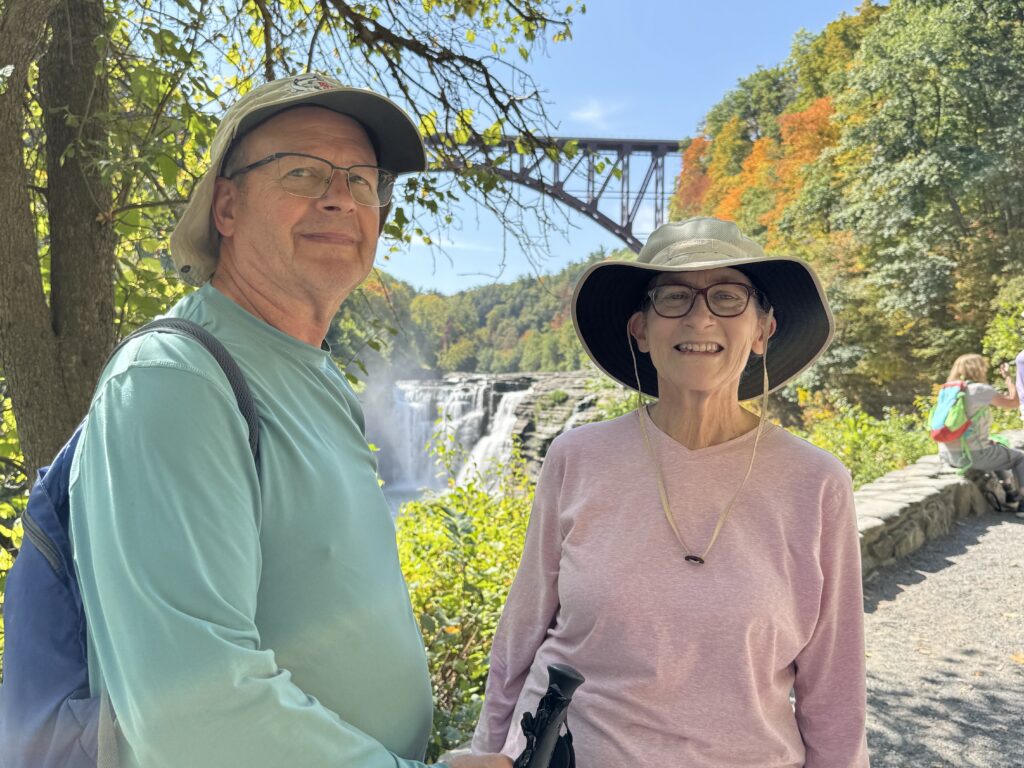
Cindy and Tony back on the trails again
The Journey Back to Myself
Gradually, and almost imperceptibly, I got better. I’d notice little tiny things: Like the day when I could rock myself up and use the walker and get myself standing up – “Oh, I couldn’t do that before.”
The first time I had to go back to the oncologist, I needed a wheelchair. I couldn’t make it to the fourth floor without a wheelchair. But as I continued with my rheumatologist’s treatment plan, things changed – I went from the wheelchair to the walker. Then, there was a cane. And now, Tony and I can take our camper van out, and we can go hiking again. I can hike!
There are still some side effects that I’ll have to live with. I have neuropathy in one of my legs. I have adrenal insufficiency. My pituitary doesn’t release enough ACTH to stimulate cortisol production. It changes my personality a little. And the treatment (hydrocortisone) affects my bones. I also have to carry an emergency injection in case of an adrenal crisis. I take intravenous immunoglobulin (IVIG) every four weeks, which really makes me feel better, gives me more energy, and helps the neuropathy a lot. I also had a round of physical therapy which made a big difference.
I will always be on some medication, but I never imagined in my wildest dreams that I would get back to feeling as good as I do now. It is a gift. I notice every new thing I can do! I am strong and able!
You can view Cindy sharing her story with a live audience here.

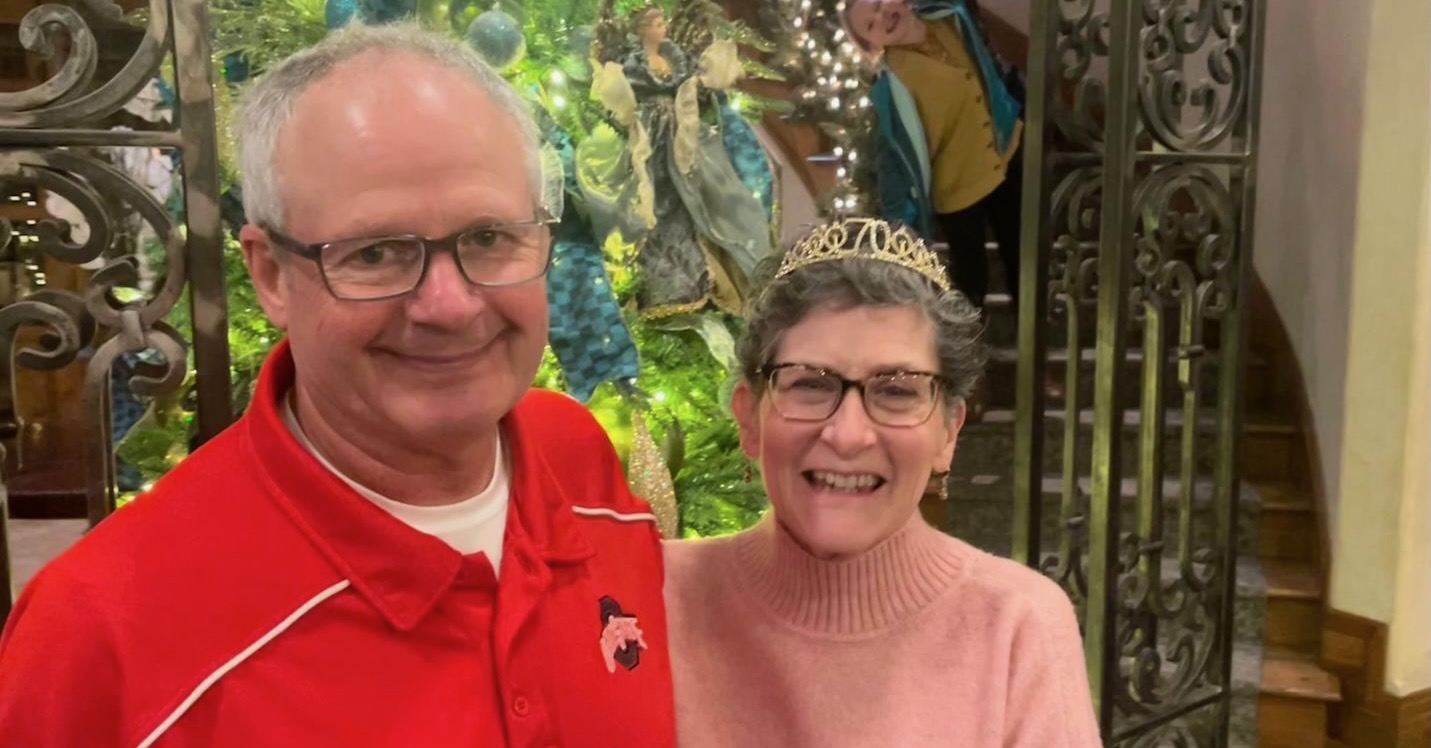
Cindy is a melanoma survivor. Since recovering from acute side effects from combination therapy, Cindy is back in action -- taking care of her grandkids and enjoying adventures with Tony in their camper van.
Details of Cindy's Case
Cancer Type
Melanoma
Immune-Related Treatment Type
Combination Immunotherapy
Immunotherapy Side Effects Experienced
- Skin reactions (recurrent rashes, itchiness, sores, thinning of the skin)
- Nerve issues (burning, cramping, numbness, tingling)
- Abdominal pain or cramping
- Diarrhea
- Fatigue or exhaustion
- Joint/bone pain or swelling
- Mobility issues (stiffness, weakness)
- Brain fog (change in thinking ability, confusion, lack of focus)
- Dry eyes
- Dry mouth (burning, lack of saliva)
Important: The opinions expressed in “Lived Experience: Stories from Patients and Care Teams” (Lived Experience Stories) are solely those of the User, who may or may not have medical or scientific training. These opinions do not represent the opinions of Foundation for Autoimmune & Cancer Support (FACS). Blogs are not reviewed by a physician or any member of the FACS editorial staff for accuracy, balance, objectivity, or any other reason except for compliance with our Terms and Conditions. Some of these opinions may contain information about treatments or uses of drug products that have not been approved by the U.S. Food and Drug Administration. FACS does not endorse any specific product, service, or treatment.
Do not consider Lived Experience Stories as medical advice. Never delay or disregard seeking professional medical advice from your doctor or other qualified healthcare provider because of something you have read on FACS. You should always speak with your doctor before you start, stop, or change any prescribed part of your care plan or treatment. FACS understands that reading individual, real-life experiences can be a helpful resource, but it is never a substitute for professional medical advice, diagnosis, or treatment from a qualified health care provider. If you think you may have a medical emergency, call your doctor or dial 911 immediately.
Check Out Our Latest Posts

How to Help
We want all cancer patients to know that new generation cancer treatment can have unpredictable and life-altering side effects – but they can be managed.
You can help us raise awareness and empower patients.