
Holly’s Experience
Her daughter Abby was immobilized by treatment side effects; here's how Holly and her family made it through
A few days after her 17th birthday, my daughter Abby was diagnosed with alveolar soft part sarcoma. We had noticed the lump in her thigh a year earlier, but the doctors hadn’t been concerned – they kept saying, “We’ll keep an eye on it.” Then, the lump started hurting, and I wasn’t taking no for an answer. They finally tested it. The lump was a soft tissue tumor; it had metastasized to her femur bone, her lungs, and her brain.
I’ll never forget how it felt seeing those scans – seeing all the metastases all over her lungs and hearing about the various treatments Abby would be going through. I held it together in the moment. But when I got home, I went into my bathroom, locked the door, and cried.
I don’t think I cried again after that. Because as upsetting as the diagnosis was, something just told me that everything was going to be okay. I don’t know how to explain it. I just always believed that it was going to be okay. So, I didn’t spend any more time crying or sitting in worry. I decided to focus my energy on the solutions, not the problem.
My husband is like me – he wants to focus on what we can control – so, we decided together that we’d just try to block out the negative as much as we could. We didn’t really talk about the cancer that much at home – only what was necessary. We wanted to preserve Abby’s peace of mind as much as we could; being young, she was kind of naïve to the how serious the situation really was, and we wanted to protect her from that reality. We were also trying to shield our older daughter, who was away at college; she and Abby are very close, and we knew that we needed to give her every reason to believe, as my husband and I truly did, that things were going to be okay.
Another perspective
Abby’s Experience: Read Abby’s account of her cancer journey and her harrowing experience with side effects.
Abby's Treatment Begins
The summer before Abby’s senior year of high school, she started cancer treatment: gamma knife surgery, chemo pills, and immunotherapy infusions. Within days of starting treatment, she was in a tremendous amount of pain. She was in so much pain one night that we could not get her down the steps. She was in my bed. Her foot was turning purple. She could not walk. She was just crying. We had to call 911. An ambulance had to take her to the hospital.
The doctor said that the pain meant that the treatment was working. They put her on narcotic painkillers to help her cope with the pain. She had to stay on painkillers, practically around the clock, for several months to manage the pain.
Abby continued getting treatments throughout her senior year, and was still in pain, but she kept going to school every day. She still wanted to live like a normal teenager. And so as much as I wanted to cuddle her and baby her, I had to just let her go be her. When she wanted to go be with her friends, we let her be with her friends. It was hard not to worry about her, but we knew we needed to trust Abby to make decisions for herself. Looking back, I think it was one of the best things we did for her.
An Immobilizing Side Effect
As the school year wore on, Abby’s walking got slower and slower. By that next summer, after high school graduation, she was walking very slowly, and she would get really exhausted.
We were concerned. She had been accepted at Ohio State and was determined to start in the fall with all the other freshmen. There was no stopping her. Her sister was at Ohio State, so that offered a bit of comfort, but we couldn’t imagine how Abby would be able to get herself around campus when walking was becoming so difficult.
She started her freshman year of college according to plan, but walking was becoming more and more difficult. And then, that fall, her leg started getting stuck in a bent position; she could hardly straighten it. Soon, her leg became permanently bent and very, very swollen – the entire bottom half of her leg was huge. I was terrified. I was sure it meant the cancer was back.
The doctors ran tests and ultimately determined that it was just inflammation – horrible, horrible inflammation. Abby’s oncologist referred us to a rheumatologist who might be able to look at the case from a different perspective. Thankfully, by some miracle, we were able to get in to see the rheumatologist the next day.
important reading about side effects
Side Effects 101: Learn how side effects of immune-related cancer treatments are unique and how to best approach them.
Go Deeper: Learn about side effects from immunotherapy and how their resemblance to autoimmune conditions can be the key to treating them.
Getting Abby Back on Her Feet
After examining Abby, the rheumatologist told Abby that if we wanted to save her leg, she’d need to be admitted to the hospital right away.
Abby stayed in the hospital for a few days, where she received intravenous immunoglobulin (IVIG) infusions. After just one day of treatment, there was a noticeable improvement in the inflammation. And by the end of the treatment, her leg was a normal size. She still had pain, and she still couldn’t straighten it, but it was back to a normal size.
After Abby left the hospital, the rheumatologist put Abby on Lyrica (pregabalin), Cymbalta (duloxetine), and Plaquenil (hydroxychloroquine sulfate) and had her start physical therapy. That was really the start of Abby getting her life back to normal, but it took five or six months before Abby was able to take her first steps without crutches.
The Power of Optimism and Faith
Abby’s now off all of her treatments, and her scans show no evidence of disease. She’s looking at grad schools and making plans for the future – optimistic as always.
I think optimism has been important for all of us the past few years. From the beginning, we were all determined to stay positive and just not let the bad thoughts come in. We never asked what her prognosis was, what they expected would happen. I never even asked for a stage. Of course, I knew the fact that it had spread meant it was bad, but we just never talked about that. Every single appointment we went to, we just focused on what we needed to do to move forward – “What’s the next step? Let’s treat what’s happening. Let’s move forward.”
We also found a lof of strength and comfort in our faith. We had always been religious, but once this happened, we got a lot more involved in church and were just a lot more open to everything than we might have been in the past. Abby had a a great support system with her church, and I know that made a really positive impact on her, and on all of us, really.
As horrible as this experience has been, I can see how it’s changed us all for the better. I think all of us are more patient and easygoing than we ever were – we just don’t sweat the small stuff anymore. Abby’s cancer really put everything in perspective. And I think we’ve learned how strong we can be and how much support we can find in our faith.
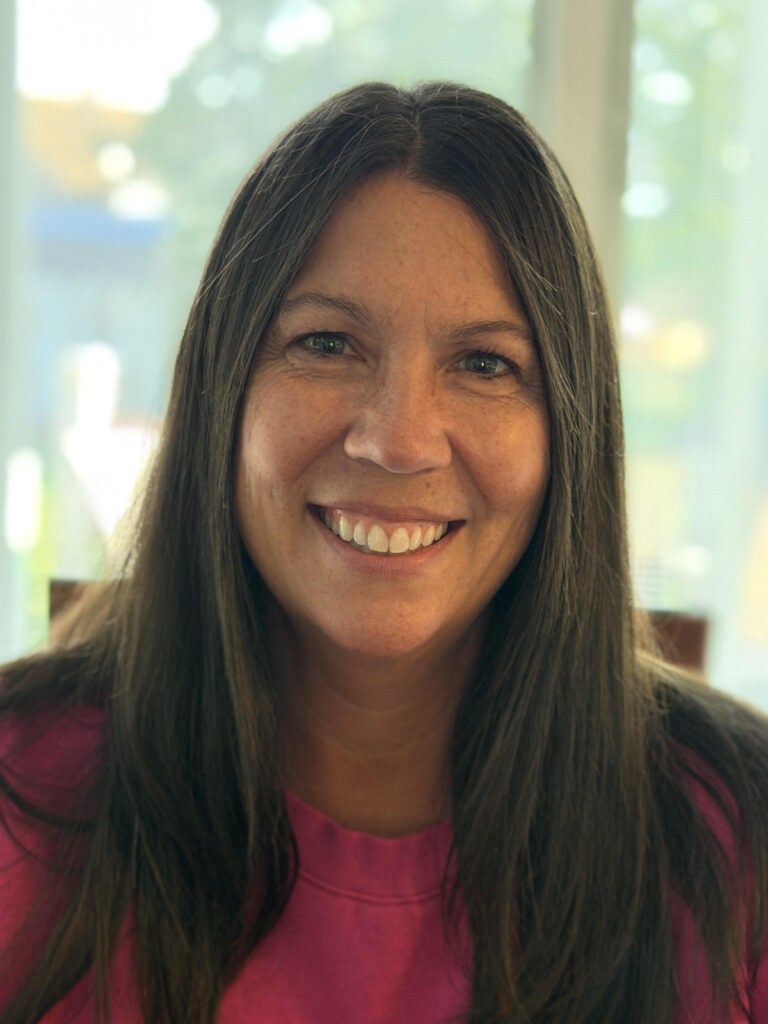
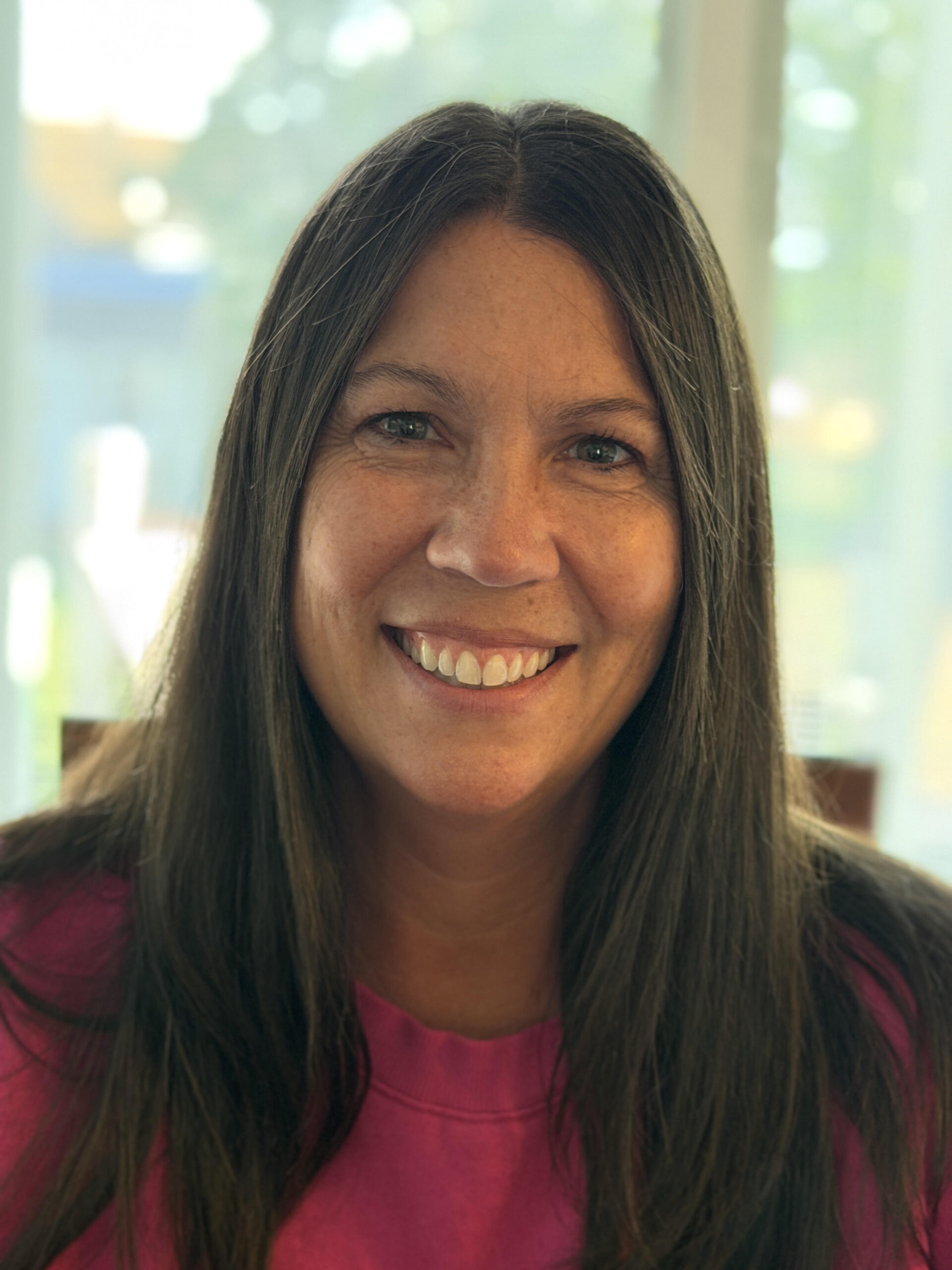
Holly is a special education teacher and has been teaching 26 years. She is married to her college sweetheart, Bob, and they have two beautiful daughters, Abby and Kate. Her favorite activities are traveling, long walks outside, board games and cards, family dinners, and watching documentaries.
Important: The opinions expressed in “Lived Experience: Stories from Patients and Care Teams” (Lived Experience Stories) are solely those of the User, who may or may not have medical or scientific training. These opinions do not represent the opinions of Foundation for Autoimmune & Cancer Support (FACS). Blogs are not reviewed by a physician or any member of the FACS editorial staff for accuracy, balance, objectivity, or any other reason except for compliance with our Terms and Conditions. Some of these opinions may contain information about treatments or uses of drug products that have not been approved by the U.S. Food and Drug Administration. FACS does not endorse any specific product, service, or treatment.
Do not consider Lived Experience Stories as medical advice. Never delay or disregard seeking professional medical advice from your doctor or other qualified healthcare provider because of something you have read on FACS. You should always speak with your doctor before you start, stop, or change any prescribed part of your care plan or treatment. FACS understands that reading individual, real-life experiences can be a helpful resource, but it is never a substitute for professional medical advice, diagnosis, or treatment from a qualified health care provider. If you think you may have a medical emergency, call your doctor or dial 911 immediately.
Check Out Our Latest Posts


How to Help
We want all cancer patients to know that new generation cancer treatment can have unpredictable and life-altering side effects – and that these side effects can be managed.
You can help us raise awareness and empower patients.