

How Advocating for Myself Paid Off
My persistence exposed a glitch in the system - and saved my mental health
By: Elizabeth Murch
I have been told by all of my doctors that I am an unusual cancer patient. I find solace in massive amounts of data, facts, and information. Knowledge grounds me and surrounds me like a weighted blanket.
I show up to my appointments with binders of flagged journal articles to discuss with my oncologist. I am of the Julie Yip-Williams approach to cancer management. I stare down the MAC truck as it guns for me. Upon diagnosis, the first thing I did was enter my data in the Kaplan-Meier Plotter to see how many years this disease had stolen from my life. In my brand of survivorship, anger is my shield, and data is my weapon.
In my quest for information and desire to “feel better,” and if I am being entirely honest, upon the suggestion of numerous medical providers (whom I am guessing could sense my unrest), I joined a support group. In some ways, it helps. In others, it triggers my insane need for information and raises it. In the support group, it is information plus treatment comparison. Now I categorize everyone’s treatment compared to mine. I know whose treatment is sub-par and whose is over the top. And there’s an emotional element that is added, too: “cancer jealousy.”
The Concept of Cancer Jealousy
Let me explain. The group is split between hormone receptive and non-hormone receptive diagnoses. So, at diagnosis, the triple negative girls are “cancer jealous” of those of us who are hormone receptive because we have “better and more” treatment options. But, at a certain point, that flips. Once the triple negative girls hit their five-year survivorship, us hormone receptive girls are “cancer jealous” of them because they are basically cured, while we have 10 years of awful hormone treatment making us fat, have acne, achy joints, dry skin … I could go on for days.
This works with staging, as well. It’s hard for stage two and above survivors who have had multiple surgeries, chemotherapy treatments, medications, complications, and the like, to be sympathetic to earlier-stage survivors who still have their breasts, ovaries, nipples, and hair. Later-stagers are “cancer jealous” of early-stagers. There is hierarchy even in pain and the attempt at survival.
Survivors want to be able to say they are at an early-stage diagnosis for a number of reasons. Most importantly, a lower staging number is desirable to survive for as long as one can, but also because there is a bit of a stigma to not finding breast cancer early – as if there is fault on the part of the patient for not finding it. (P.S. I had four mammograms that missed my “slow growing 3.8 mm tumor” – it is not my fault.)
So when my fellow support group member (we call ourselves “Breasties”) said to me that the staging rubrics changed and that everyone was getting a better staging level when they entered their personal cancer data into the new rubric, I was “all in” and ready for some good news. I read all the information, I plugged in my data, and came up with a significant change for the better. I was elated!! HAPPY—FOR THE FIRST TIME IN FOREVER! I was elated! Walking. On. Clouds.
immunotherapy when you have an autoimmune condition
Immunotherapy works by releasing the “brakes” on the immune system, and when your immune system already tends to attack your healthy tissues, removing those brakes can be risky. Learn more here.
Advocating for a Staging Update
I emailed my oncologist and asked her to confirm my findings. I always describe living with a cancer diagnosis (even as a “NED” [no evidence of disease]) as having an app that is always running in the background of your mind that you can’t turn off – I needed that additional level of confirmation even though I was SURE that I was right that my staging had improved by an entire level. Admittedly, clinically, there was probably not a giant difference in any course of treatment between levels of diagnosis of which I was subject, but the mental and emotional component was astoundingly significant to me.
My oncologist was uncharacteristically vague in her reply. She wanted to “double check” and talk to me at my appointment in a few days. I wasn’t worried. I knew I challenged my providers to be extra-right because of my need for information and respected their need to be cautious and measured in their replies to me. (Frankly, I would be annoyed with me, too.)
On the Verge of Giving Up
At my appointment, my doctor put on her “I’m Sorry Face” (the same face she used when she had to tell me after surgery that pathology was wrong and my cancer had in fact spread, and the same face she used when chemotherapy blew up my gallbladder, and the same face she used (though, a little different – more exhausted) when I begged for the “red devil” chemotherapy even though it was not my standard of care), and said she had double checked both herself and with others in the department and that my staging did not change. I was pole-axed. How? She plugged it in the computer software staging program, and it didn’t change. I left in a daze. Another way cancer is the opposite of Marie Kondo – it steals my fucking joy.
I told my “Breastie” friend. “Told” is a big word for “texted,” because telling would require talking, which I could not do. She was shocked. She was relentless. She gave me data. I gave her nothing. She pushed me to get answers. I gave up. I entered a depression. Hello, valley, I am yours. I contacted a therapist for the first time in this stupid “cancer journey.” I started wearing my “survivor” t-shirt hoping people would be nicer to me. I was “in my feelings.” But my friend kept at it. She kept pushing me. I bobbed out of the water for breath one more time before drowning. I relented and contacted my oncologist one more time: “Why didn’t it change for me?”
important reading about side effects
Side Effects 101: Learn how side effects of immune-related cancer treatments are unique and how to best approach them.
Go Deeper: Learn about hormone therapy side effects and how their resemblance to autoimmune conditions can be the key to treating them.
Persistence Finally Pays Off
I sent my calculations again. I sent the article again. I was sitting outside a courtroom obsessing about this when I should have been preparing for trial (I’m an attorney) and sent an email to her and asked, “One more time – please spell it out for me – why didn’t it get better for me but it did for everyone else?” I think I sounded uncharacteristically pathetic. I also think when I said that the fact that my staging didn’t change was the final straw sending me to therapy, my oncologist was spooked.
Guess what?
It did get better for me. THERE WAS AN ERROR IN THE ONLINE CALCULATOR SYSTEM THAT MY VERY POPULAR LARGE HOSPITAL SYSTEM WAS USING FOR STAGING.
Are you kidding me? For real. So, I was right. My support group friend was right. My oncologist was wrong. The hospital was wrong. Because of my persistence, my oncologist uncovered that the online calculator that the hospital was using was defaulting/stuck on clinical stage as the only data entry point without allowing for the entry of pathological stage data. I had pathological stage data, not clinical stage data, and once that small error was changed in the online calculator, it changed the equation in my favor.
Do I feel better? I guess. What I feel is scared that I cannot trust the system. That I have to continue to be nervous and psychotically obsessed with knowledge because of this. (This is not the first abnormality that I have uncovered … the story of sending me mammogram reminder letters after cutting off my breasts months earlier is a story for another day.)
What I also feel is thankful that my oncologist (who is brilliant) is willing to admit that there is room for improvement and that she is rooting for me. Through my attention to detail, I will continue to advocate on behalf of those who can’t do so for themselves, or perhaps aren’t aware that they need to. But I beg everyone in the process of caring for cancer survivors to be diligent because there can be giant emotional costs to even tiny errors in the system of care.
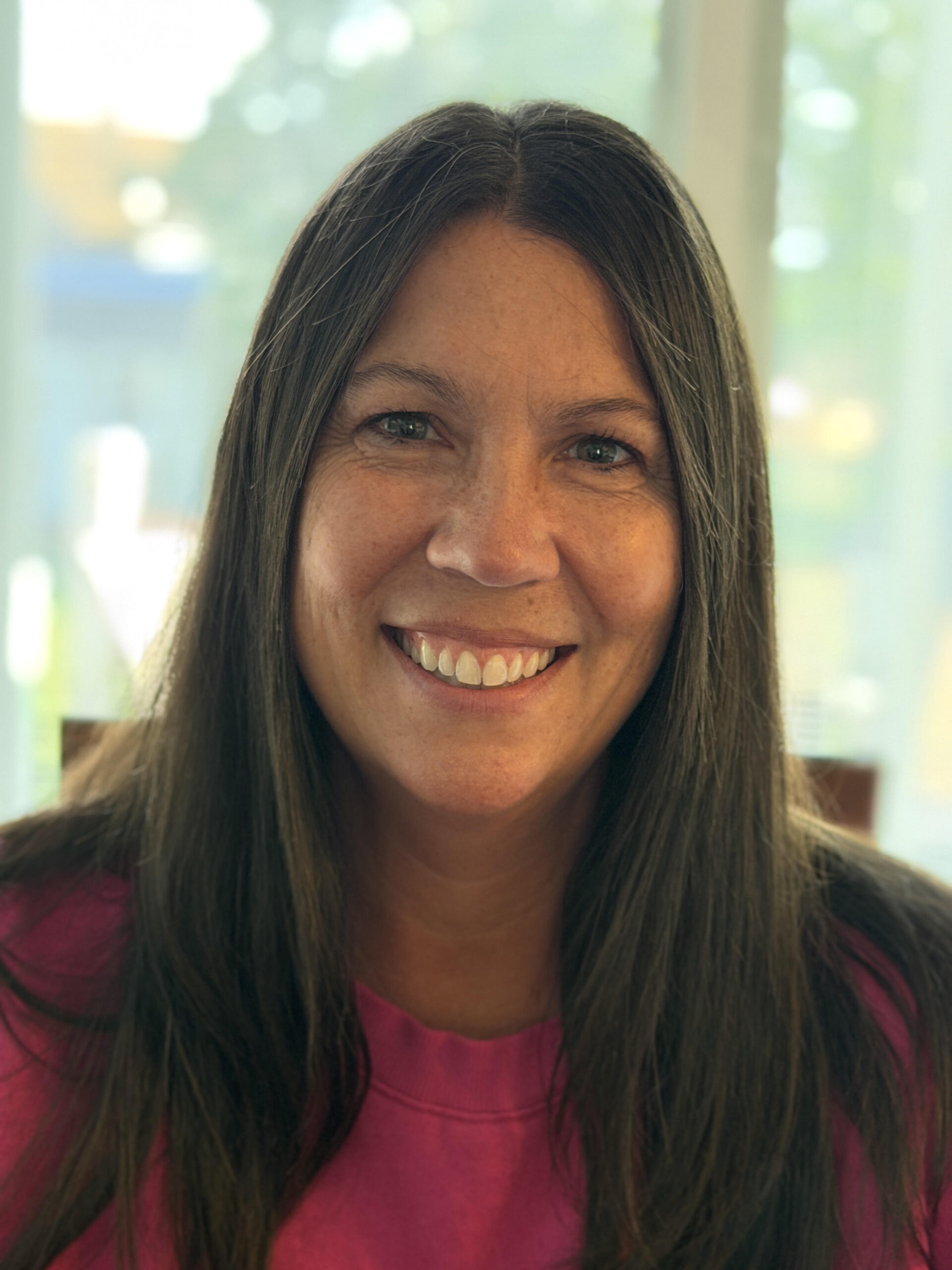
Elizabeth Ziewacz Murch underwent 10 years of hormone therapy after a double mastectomy, radiation, and multiple reconstruction surgeries. Her own patient journey and eventual relief from treatment-related rheumatoid arthritis now fuel her advocacy, inspiring her to help others find hope, answers, and effective treatment much earlier in their own journey. Elizabeth is a litigation attorney in Ohio.
Elizabeth's cancer
Cancer Type
Stage IIB ER/PR+, HER2-negative invasive ductal carcinoma with lobular features
Immune-Related Treatment Type
Hormone Therapy
Important: The opinions expressed in “Lived Experience: Stories from Patients and Care Teams” (Lived Experience Stories) are solely those of the User, who may or may not have medical or scientific training. These opinions do not represent the opinions of Foundation for Autoimmune & Cancer Support (FACS). Blogs are not reviewed by a physician or any member of the FACS editorial staff for accuracy, balance, objectivity, or any other reason except for compliance with our Terms and Conditions. Some of these opinions may contain information about treatments or uses of drug products that have not been approved by the U.S. Food and Drug Administration. FACS does not endorse any specific product, service, or treatment.
Do not consider Lived Experience Stories as medical advice. Never delay or disregard seeking professional medical advice from your doctor or other qualified healthcare provider because of something you have read on FACS. You should always speak with your doctor before you start, stop, or change any prescribed part of your care plan or treatment. FACS understands that reading individual, real-life experiences can be a helpful resource, but it is never a substitute for professional medical advice, diagnosis, or treatment from a qualified health care provider. If you think you may have a medical emergency, call your doctor or dial 911 immediately.
Lived Experience: Stories From Patients and Care Teams

How to Help
We want all cancer patients to know that new generation cancer treatment can have unpredictable and life-altering side effects – and that these side effects can be managed.
You can help us raise awareness and empower patients.